April 24, 2026 | Jonathan Bird
10 Moves to Make at 45 That Your Future Self Will Thank You For
After 12 years as an advisor, I keep seeing the same thing happen to people at 45. They generally end up in one of two camps: either they're already investing in index funds, maxing out their 401k, and feeling ahead of the game — or they know they're behind and they're looking for a checklist to catch up.
The frustrating part? Both groups often end up in the same place, and it's not where they want to be. That's because nearly every video, article, and financial plan focuses on only one side of the equation: the money side. The clients I've met who are genuinely happy in retirement didn't just get the money right. They made the lifestyle changes that build true wealth.
Here are both sides — starting with the money, because the lifestyle changes don't matter if you never reach financial independence.
The Financial Moves
1. Decide What "Enough" Looks Like
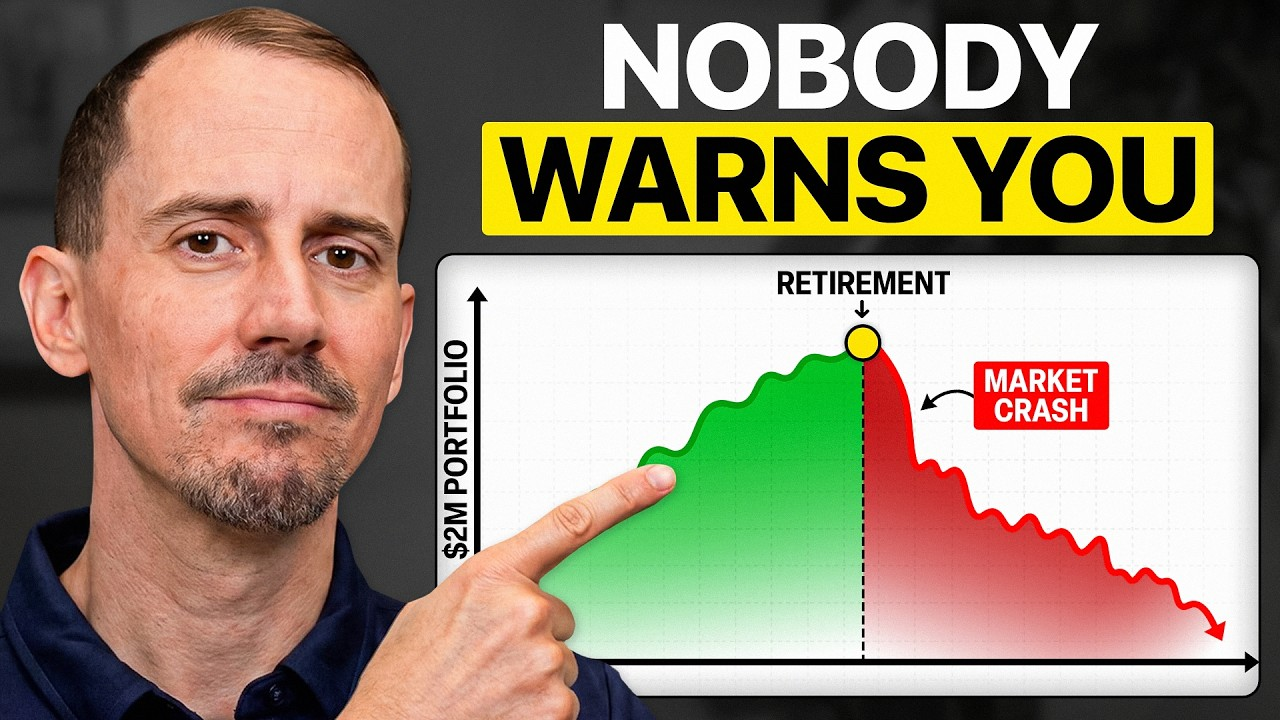
At 45, most people have a vague idea of what they need to retire. One million. Two million. That's not a plan — that's hope.
Without a specific goal, you can work tirelessly your entire career and never arrive, because you never defined where you were going. Start asking concrete questions: Where am I living? What am I spending money on? What does an ideal Tuesday look like?
Here's what most people miss: without defining enough, human psychology shifts the goalposts automatically. Hit $1 million and it doesn't feel like enough, so the target becomes $2 million. Then $3 million. That goalpost-shifting isn't ambition — it's a lack of clarity about what you actually want your future to look like.
2. Get Ahead of Catch-Up Contributions
The tax code actually rewards you for getting older. At 50, you unlock catch-up contributions — a higher ceiling on what you can put into your 401k, IRA, and other tax-advantaged accounts. The government is essentially saying: we know you might be behind, here's room to make up for it.
The mistake I see is people waiting until 50 to start thinking about this — and then scrambling. At 45, you have five years to dial in your contribution habits so that when the ceiling rises, stepping up doesn't feel like a sacrifice.
While you're at it: if your employer offers a 401k match and you're not capturing all of it, you're declining free money. Same with an employee stock purchase plan — in many cases you can sell shares shortly after they vest, capturing the discount with limited market exposure. And at 45, a Roth IRA still has a 20-year runway before a traditional retirement age — plenty of time for compounding to work.
3. Invest in Productive Assets
I'll be direct: at 45, you don't have the luxury of gambling with your retirement money.
Productive assets are things with a long track record of generating real returns — stocks, bonds, real estate, cash-producing assets. Boring? Maybe. But they've worked across 10, 50, 100-year periods. What tends not to work: speculative assets that produce no cash flow, lottery-ticket thinking, concentrated bets on individual stocks without deep research, or acting on your neighbor's hot tip from the barbecue.
This isn't about risk tolerance. It's about having an investment philosophy reliable enough to carry you to retirement and through it. At 45, you have enough runway to recover from a mistake — but not from a pattern of mistakes.
A college friend of mine put 80% of his portfolio into airline stocks right before COVID. When the market tanked, those stocks got hammered — and that single decision set his retirement timeline back more than eight years. Don't be that guy.
4. Build a Tax Plan for Retirement
This is the step that can potentially save tens or even hundreds of thousands of dollars over a lifetime — and almost nobody is thinking about it at 45.
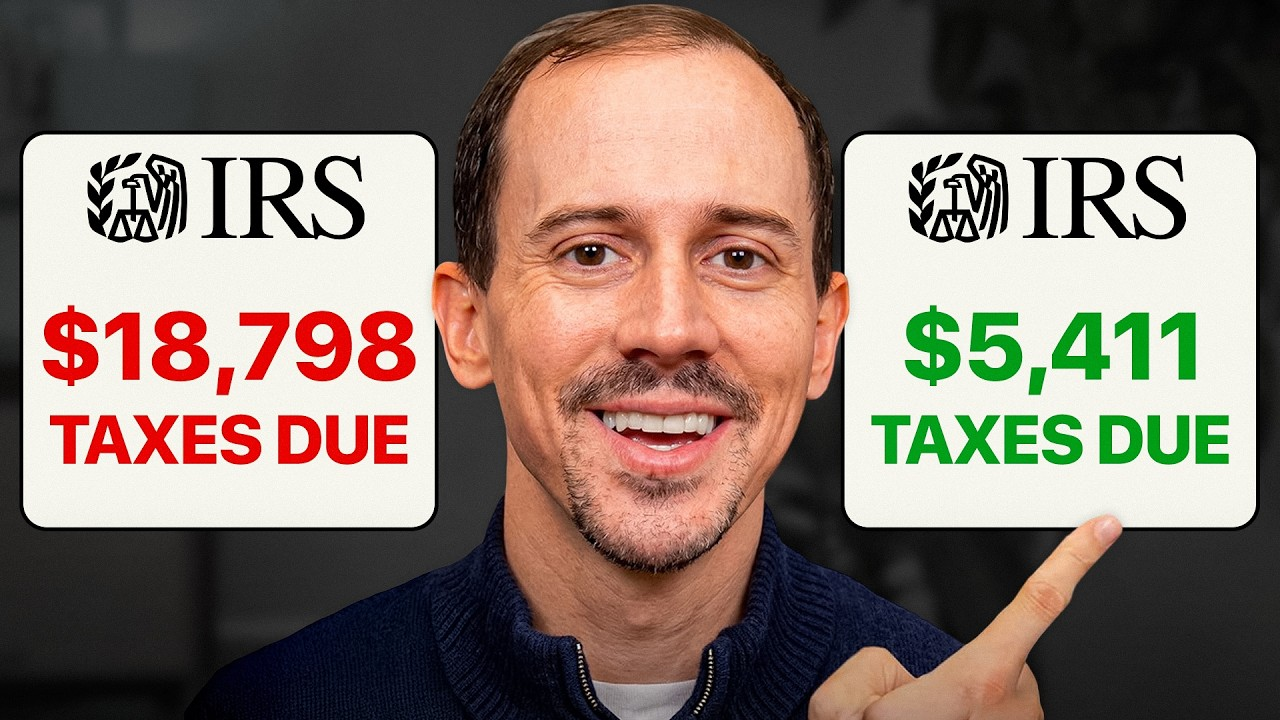
Most people put everything into a traditional 401k. It feels responsible. But when you retire, every dollar withdrawn is taxed as ordinary income, and you've lost all flexibility. The concept is simple: diversify your tax buckets. Pre-tax money in the 401k, after-tax money in a Roth IRA (backdoor contributions if your income is too high), and additional savings in a taxable brokerage account, which has no contribution cap. Each bucket is taxed differently at withdrawal — and that flexibility is enormously valuable in retirement.
Two more levers worth knowing. First, where you live: moving from a high-tax state to a low-tax state in retirement could save tens of thousands in state income taxes alone. Second, asset location. A plastic surgeon I worked with had all his stocks in his IRA and all his bonds — paying over 5% interest, taxed at his 37% ordinary rate — in his brokerage account. When I asked why, he said he'd never thought about it. Swapping the locations saved him over $4,000 a year. Compound that across 15 working years plus retirement, and you're looking at six figures in tax savings from one adjustment.
5. Address Healthcare Before It Addresses You
Few people are thinking about this at 45, and it's the final chess move on the financial side.
If you retire before 65, Medicare isn't available yet — you'll need to bridge that gap with COBRA, an ACA policy, or other coverage, and premiums can run $10,000–$15,000 a year. If you retire after 65, Medicare helps enormously, but it has gaps. One example: Medicare Part A covers hospitalization, but there's no out-of-pocket cap — a prolonged hospital stay can generate unlimited costs without supplemental coverage.
And then there's long-term care. For anyone living past 65, there's roughly a 70% chance of eventually experiencing a long-term care event. That doesn't mean rushing out to buy insurance — it means deciding, while you still have time, how you'd fund care if you needed it.
The people who handle healthcare well aren't the ones with the most money. They're the ones who asked these questions early.
The Lifestyle Moves
6. Kill Lifestyle Creep Before It Kills Your Retirement
At 45, you're probably earning more than you ever have — which is exactly when lifestyle creep becomes most dangerous. The nicer car, the bigger house, the trips you "deserve."
Lifestyle creep is hard to spot because it feels like progress. You're making more, so you're spending more, and that feels normal. The question to ask: is my money going toward things that genuinely make me happy, or toward things that make me appear successful? Those are very different categories, and being honest about which one you're funding is worth more than any investment return.
A client of mine got into collecting Rolexes — justified each purchase by telling himself the resale market was strong. He never resold a single one. Fifty thousand dollars later, it dawned on him that all of it could have been compounding in his 401k, meaningfully accelerating his retirement timeline.
7. Invest in Your Health Like It's Your Most Valuable Asset
Confucius said it: a healthy man wants a thousand things; a sick man wants one.
Across hundreds of retirees, health is the most valuable asset by a nautical mile. You can have $10 million in the bank, but if your health is gone by 65, you're not happily retired — you're stuck, and the money can't fix it.
At 45, your body starts sending signals — mostly about needing more recovery than before. The question is whether you'll listen. Longevity physician Peter Attia frames this as "Medicine 3.0" — preventing problems instead of reacting to them. His core pillars: strength, cardiovascular fitness (especially VO2 max), sleep, nutrition, and mobility. His practical prescriptions include protecting sleep as a priority and around three hours a week of easy zone 2 cardio — the pace where you can still breathe through your nose.
For strength, the secret isn't the perfect program. It's finding what you'll actually keep doing. For me, that's CrossFit in a neighbor's backyard with friends — nothing fancy, a few barbells, some friendly competition. Find your version.
8. Build Friendships Outside of Work
This one catches people completely off guard, and it's one of the biggest factors in whether someone enjoys retirement.
At 45, most of your social life probably runs through your job — the coworkers you grab lunch with, the people you see daily without trying. Those relationships are real, but they're built on propinquity: they exist because you're in the same place at the same time. When you retire, the proximity disappears, and most of those friendships fade. The glue was the routine, not the relationship.
The good news: at 45 you still have 10–20 years to build or rekindle friendships that don't depend on a workplace. The retirees who struggle aren't the ones who didn't save enough — they're the ones who relied entirely on work relationships and never replaced them. Retired and lonely is a hard place to be.
9. Find Something That Lights You Up
Here's a question almost nobody asks: what would you actually do with your time if you didn't have to work at all?
Retirement hands you roughly 20,000 hours of free time in the first five years alone. Most people have no plan for it. Work spent decades filling their schedule — telling them where to be, who to talk to, what to do. Remove that, and it creates a vacuum.
The retirees I know who thrive got curious early. One client is learning Spanish for the first time at 76. Another teaches a community college course on AI. Another got deep into birding, which turned travel from sightseeing into intentional adventure — photographing birds and meeting people from South America to Asia. For others it's a triathlon, a faith community, a service organization. And here's the multiplier: the skill set from your career can supercharge whatever you pursue next.
My own uncle is the cautionary tale. He retired around 45 but kept his car wash — counting coins and restocking supplies year after year. Into his late 70s, when his wife and I asked why he was still doing it, his answer was honest: "If I sell the car wash, what am I going to do with my time?" That's a brutal place to be, because making new friends and finding new purpose gets harder with every decade.
10. Invest in Yourself
The single highest-returning investment you can make isn't in your portfolio. It's in your own skill set.
The biggest financial risk you'll face in your 50s may not be a market downturn — it may be technological disruption to your career. If you've invested in yourself, a layoff at 55 isn't a forced early retirement. It's a pivot: consulting, a new direction, an opportunity. If you haven't, finding a job at 58 in an industry that's no longer hiring for your skill set is a terrifying scramble.
Beyond the safety net, investing in yourself creates options: the option to retire early because you've built income outside your employer, the option to keep working because you love it, even the option to never fully retire because your work and your life aren't at war.
The photographer at my wedding embodied this. Trained as a teacher, she picked up a camera and shot a wedding for free. That turned into paid work, and seven years later she was being flown to Italy to shoot destination weddings. She'll never fully retire — not because she can't, but because she doesn't want to.
One Last Thing: Gratitude
Something personal, courtesy of my therapist (shout out to Doug). On my bathroom mirror, there's a notecard with one word: gratitude. Every morning and night when I brush my teeth, I write down something short that I'm grateful for.
It's one of the most valuable habits I have. It trains my mind to find what's good — even in weeks when circumstances aren't great. The contrast I see in people who don't practice this is striking: their minds default to looking for what's missing, and they always find it. I've met countless millionaires with more money than they could ever spend who still feel like it's not enough.
The half-life of gratitude is short. If you don't practice it daily, it fades like mist. But money alone has never made any of my clients feel wealthy. Gratitude — paired with health, friendships, and purpose — is what does.