March 28, 2026 | Jonathan Bird
The 8 Retirement Fears Nobody Talks About (But Everyone Feels)
Nobody tells you about the dark side of retirement. They tell you to save, invest, and plan your withdrawal strategy. But here's the truth: retirement is going to test your marriage, challenge your identity, and force you to rethink your purpose in ways you're completely unprepared for.
After 12 years working with hundreds of retirees, I've had clients cry in front of me. They've shared their deepest fears about their spouse, their money, their time, and their health. The ones who struggle aren't the ones whose portfolios shrink — they're the ones who weren't prepared for what retirement actually brings.
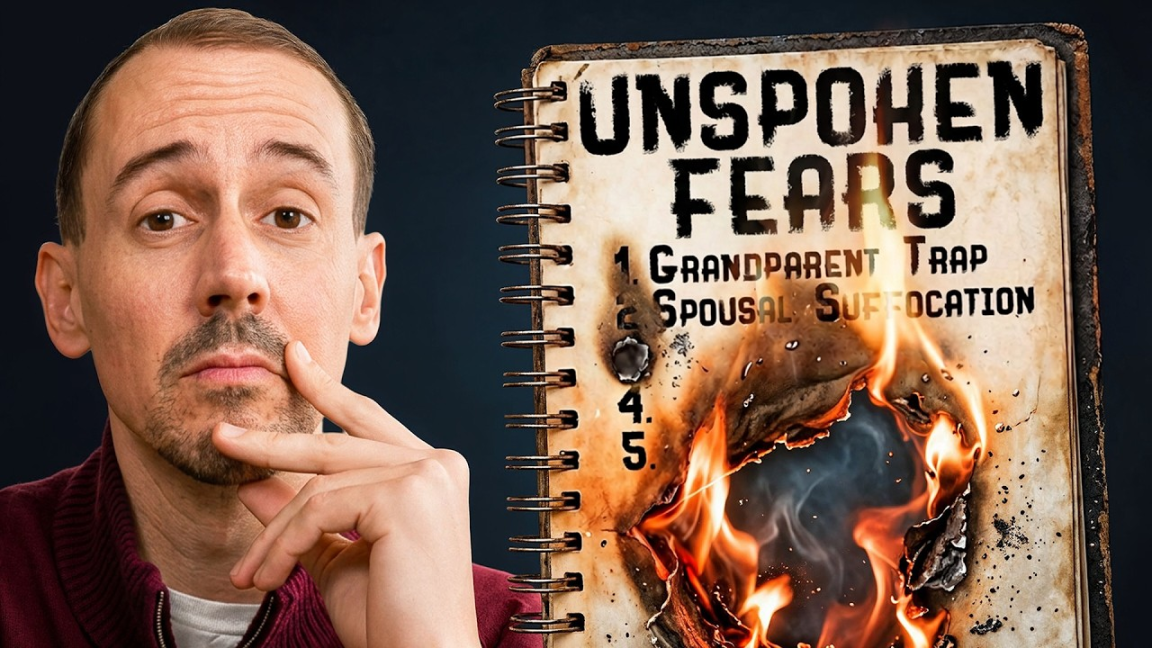
Here are the eight fears I see most. Rarely are they on any retirement planning checklist.
1. The Bucket List Burden
Social media has a lot to answer for here. The couples at Lake Como, learning pottery in Sri Lanka, hiking Patagonia. Society has decided that retirement should be one long grand adventure — which raises an uncomfortable question for anyone who just wants to sit quietly and read: Am I doing this wrong?
There's real performative pressure in retirement to stay busy, stay adventurous, and keep moving. It can feel like if your retirement doesn't look like a bucket list, you're failing at the very thing you're supposed to be enjoying.
One of my favorite clients is named Lisa. She spends her retirement with her horse — feeding it, brushing it, trotting trails through the desert. She doesn't own a computer, isn't on social media, and genuinely doesn't care what anyone thinks of how she's spending her time. I find myself trying to be more like Lisa.
There is no wrong way to retire, as long as you're actually enjoying it.
2. Dream Destination Disappointment
After 30 years of working, you finally make it to the place you always imagined — the beach house, the mountain cabin, the city you always wanted to live in. And then, a few months in, the new reality starts to feel like wallpaper.
There's a name for this: hedonic adaptation. We adjust to our circumstances faster than we expect. But what almost no one thinks about is what gets left behind in that move — the social network built over 10, 20, or 30 years that was quietly the most powerful thing in their life.
A client named Jake spent his career as a car mechanic in Southern California, ran his own shop for decades, and dreamed of retiring to Hawaii. He made it happen. Less than a year later, he called me and said he was moving back. His reason: "The beach is great. But not without my friends."
The advice I give clients now: if you have a dream destination, rent before you buy. Test it. At the very least, give yourself time to build a new social network there before making the move permanent.
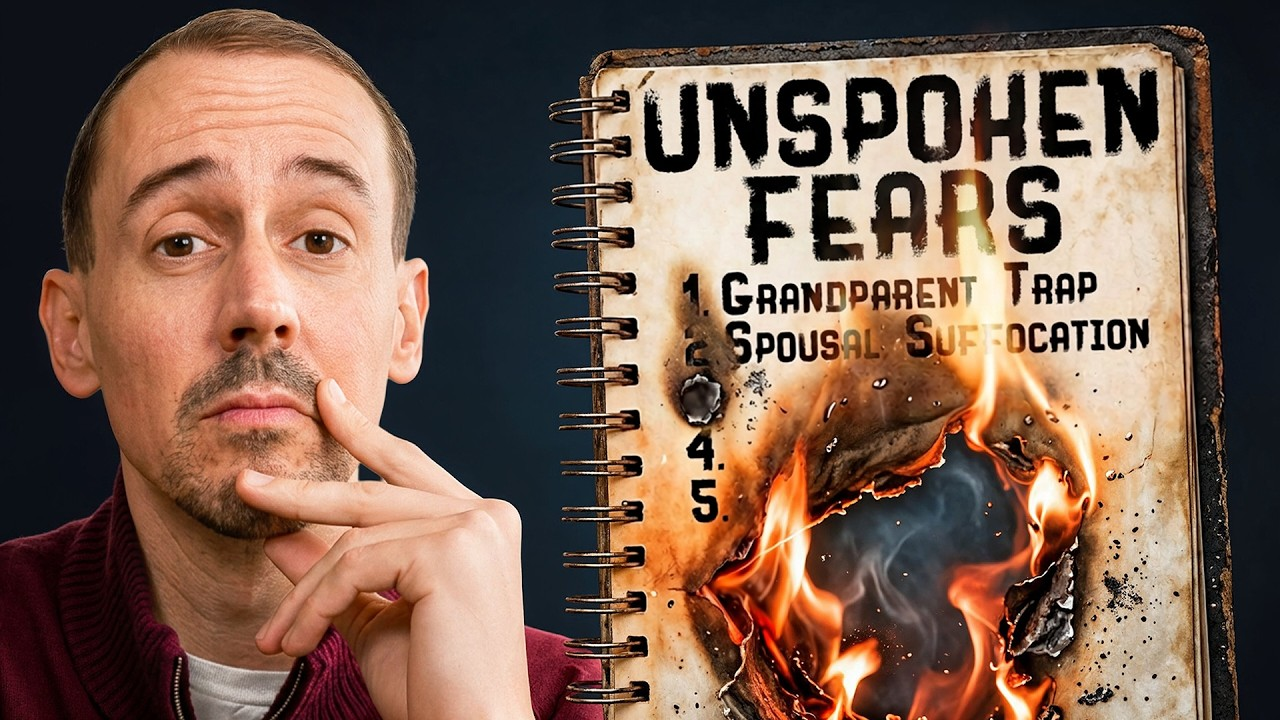
3. The Grandparent Trap
This one almost never gets said out loud. There's an unspoken expectation that once you retire, you become the free babysitter — and you're supposed to want that role. You love your grandkids. Of course you do. But the fear is that retirement gets quietly hijacked by childcare, and saying so feels selfish.
So people don't say anything. And the silence turns into resentment that never quite surfaces as a blowup — it just leaks into the relationship. A reluctance to answer the phone. Conversations that feel a little more guarded than they used to.
A client named Josephine wanted to travel extensively in retirement — more than usual, because her previous marriage had kept her from doing it. She was so afraid her new role as a grandmother would prevent that, she started pulling back from her son and granddaughter entirely rather than having the conversation. When she finally did talk to her son, she learned he only wanted a half day a week. She could travel and be a grandmother. She just needed to ask.
4. Spousal Suffocation
For 30 or 40 years, you each had your own rhythms — the commute, the workday, the gym after work. Retirement wipes all of that away overnight. Suddenly you're spending 16 hours a day together, and things you never noticed because you only saw each other in the evenings are now impossible to miss.
This is what some therapists call roommate syndrome. The fear isn't that you don't love your spouse. It's that you don't know how to be around them all day, every day.
What I've seen repeatedly is that many marriages are built around shared responsibilities rather than shared interests. When the responsibilities fall away — the kids are grown, the bills are under control, the house is paid off — couples sometimes discover they don't know how to enjoy time together.
Tina and Adam had been happily married for over three decades. Within months of retiring, they were arguing about the TV volume. The solution, almost embarrassingly simple: Adam started leading a cycling club three times a week. A little structure, a little space, their own separate circles. They were fine again.
5. Isolation
Most people don't realize how much of their social life was an accident. There's a concept called propinquity — friendships built on proximity. Your colleagues, your lunch crew, the people you'd catch in the hallway. Those relationships didn't require much effort because the environment created them automatically. Retirement ends that overnight.
It doesn't feel like a dramatic loss at first. It's more like a slow fade. The group chats go quiet. The invitations slow down. And one day you realize it's been a long time since you made a friend from scratch.
This isn't just emotionally uncomfortable. Loneliness in retirement is one of the strongest predictors of cognitive decline and early mortality. It is a health risk that almost nobody is treating like one.
A client named Dean spent 30 years in the same career and assumed his work friendships would carry into retirement. One did. The rest faded within a few years. He's still, in his mid-60s, learning how to build new friendships. It's harder than it sounds.
6. Financial Dysmorphia
This isn't about running out of money. It's about what happens psychologically when the paychecks stop.
For your entire working life, money flowed in. You saved it. You watched the balance grow. Then retirement flips the script completely. Every restaurant meal, every tip, every purchase starts to feel different — not like spending, but like losing. Financial dysmorphia is the experience of feeling like every dollar spent is moving you closer to poverty, even when you're financially secure.
The rational brain knows you're fine. The emotional brain doesn't care.
What this leads to in practice: people skip the restaurant, cancel the trip, decline the golf club membership they finally have time to use. The tragedy isn't running out of money. It's being deprived of the freedom that money was supposed to buy — by the fear of spending it.
7. Ego Death
This one hits hardest for people who were genuinely excellent at their jobs.
You had a title, a team, decisions that mattered, and people who needed you. Work gave your days structure, your identity definition, and your life a clear sense of purpose. Retirement removes all of it at once — and what's left is a question most people aren't ready for: If I'm not my job, who am I?
Total freedom sounds like a gift. Psychologically, total freedom without structure is a burden.
A client named Casey ran a marketing agency and fed off the energy of being needed. In retirement, she tried golf and hated it. Tried traveling and found it hollow. Then she volunteered to coach her granddaughter's soccer team — a group of nine-year-olds with no interest in her former title or professional reputation. What she found surprised her. She told me: "It's nice to be needed without trying to impress anybody." That was enough.
8. The Finality of the Last Act
This is the fear nobody names, because it flies too close to something we spend our whole lives avoiding.
Up until retirement, life has always had a next chapter. Graduation. First job. Promotion. Marriage. Kids. There was always a new horizon. Retirement removes that. For the first time, there is nothing more on the horizon — and the fear, the one that sits quietly beneath all the others, is that this is the final stage. Not the end of a career. The beginning of a countdown.
A client named David built a construction company from three employees to over 300. He enjoyed his first year of retirement. About 18 months in, his wife told me he'd started setting his alarm for 6 a.m. — and just sitting with his coffee, staring into space.
When I finally asked him what was going on, he was direct: "I'm trying to come to grips with the idea that there's no more hill to climb."
Over the following months, something shifted. He stopped trying to find the next thing and started trying to be present — for his wife, his kids, his grandkids. He came back and told me: "None of them ever cared about the title or the company. They just wanted me to show up."
That was enough for them. Slowly, it became enough for him too.
Retirement isn't bleak. But it does force something that a working career never required: finding meaning in being, not just in doing. The clients who handle it best aren't the ones who keep pushing to find more to accomplish. They're the ones who learn to find comfort in the stillness.
That is a hard skill to develop at 65. But the ones who do are the ones who enjoy retirement most.
Whether you're five years out or five days out — retirement isn't just a financial problem. It's a life transition. And like every major life transition, it gets easier when you're honest about what you're actually facing.