May 27, 2026 | Jonathan Bird
The System Wasn't Built for Single Retirees. Here's How to Beat It Anyway.
Almost every default in retirement planning was built around married couples. The Social Security benefits, the tax brackets, the per-person spending benchmarks — they all assume two people. If you're single, you're navigating a system that wasn't designed for you. And most financial advice makes this worse, because it quietly assumes a spouse exists somewhere in the plan.
Here are the five obstacles single retirees face that almost nobody addresses clearly — and five concrete strategies to fix each one.
Meet Sarah
Sarah is 62, planning to retire at 63, and based on family history expects to live to around 90. She's saved just shy of $1.3 million across her 401k, brokerage account, and Roth 401k. She owns her home outright — worth about $700,000. Her goal is to spend just under $100,000 a year, adjusted for inflation, while covering healthcare both before Medicare and into long-term care.
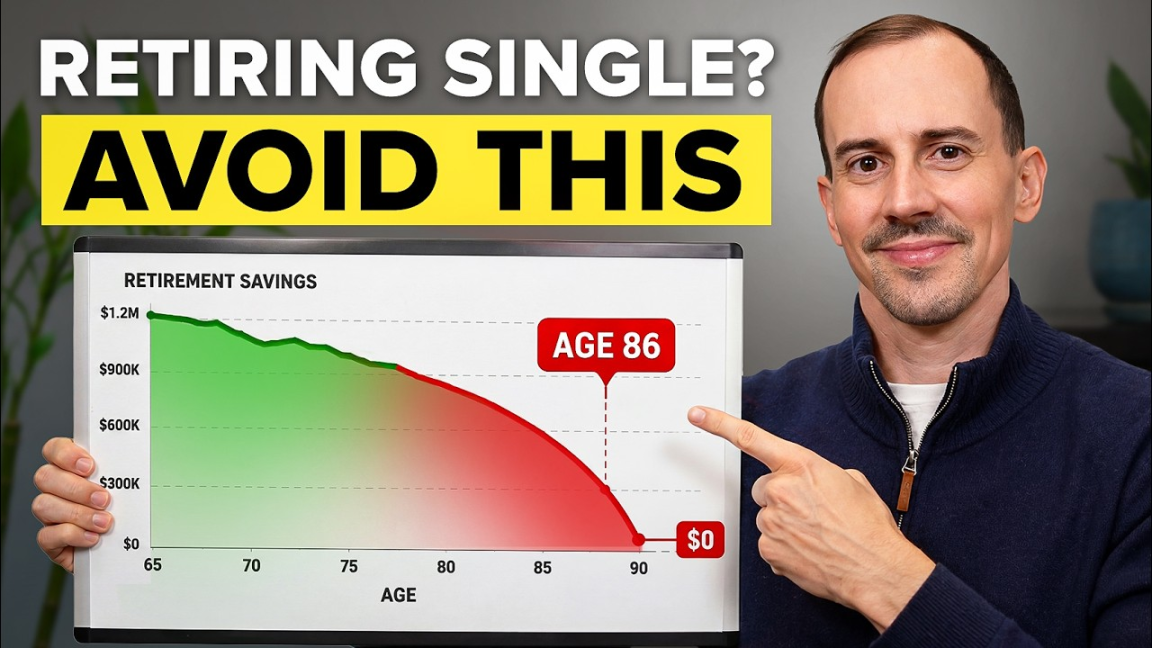
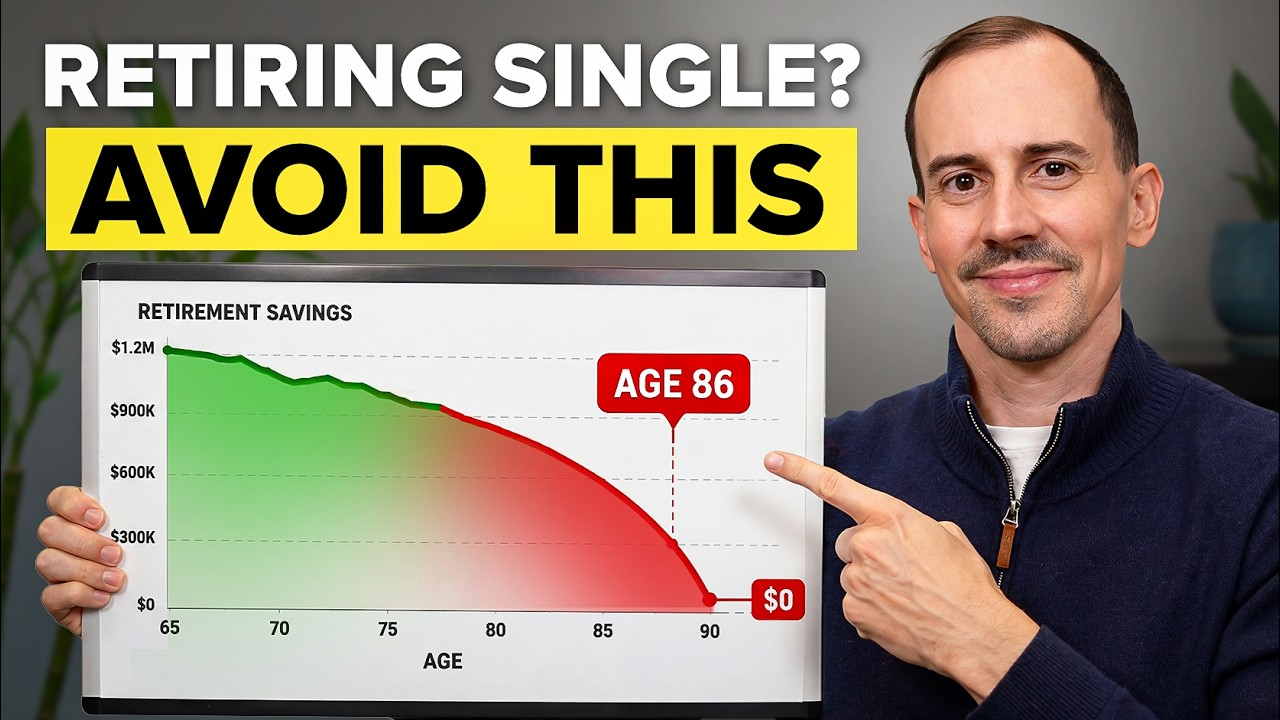
On paper, $1.3 million sounds like more than enough. Run the numbers as her plan currently stands, and she runs out of money by 87 or 88. The worst-case scenario, despite having done everything seemingly right.
Here's why — and how to fix it.
Obstacle 1: No Social Security Survivor or Spousal Benefit
If Sarah had been married to someone with a higher Social Security benefit who passed away first, she could inherit that higher check — a meaningful boost to her guaranteed income floor. That option simply isn't available to her.
One detail worth checking: if you were married for at least 10 years and haven't remarried, you may still be eligible for a spousal or survivor benefit based on that former marriage. It's worth verifying.
The fix — Social Security timing. For most single retirees, Social Security is the only source of guaranteed, inflation-adjusted income for life. That makes the timing decision one of the most powerful levers available. Sarah's original plan was to claim at 63 — but every year claimed before 67 reduces the benefit permanently, while every year deferred past 67 adds roughly an 8% lifetime raise. Wait until 70 and that's a 24% permanent increase.
For Sarah, waiting from 63 to 70 means an additional $415,000 over her lifetime. That single decision directly addresses her biggest risk: running out of money too soon.
Obstacle 2: No Spousal Income Buffer
Sarah wants to retire two years before Medicare eligibility. Bridging that healthcare gap costs roughly $175,000 over those two years. A married couple might absorb that with a second income or shared resources. Sarah has neither.
This is a reality to plan around explicitly from day one — bridge coverage costs need to be modeled into the plan, not discovered later.
Obstacle 3: No Cost-Sharing With a Spouse
Married couples split nearly everything — housing, utilities, groceries, streaming services. Every one of those costs falls entirely on Sarah alone. Her full $100,000 annual spending goal rests on her Social Security check and her portfolio, with no one to share the load.
The fix — right-size the home. Many single retirees are living in homes acquired decades ago, when life looked different — a marriage, children, a different season entirely. Sarah's $700,000 home is a candidate for this conversation.
Downsizing to a $300,000 home does two things: it lowers ongoing housing costs, and it frees up $400,000 in equity that can move into her investable portfolio, actively supporting retirement spending. Relocating to a no-income-tax state like Tennessee compounds the benefit further. This single move significantly shifts both when she can retire and how much she can spend.
Obstacle 4: Punishing Tax Brackets
This one surprises people. When Congress designed married-filing-jointly brackets, they didn't just double the single filer brackets — they added extra room on top, letting married couples earn more before hitting higher rates. Single filers reach the 22% and 24% brackets faster, and trip into net investment income tax and Medicare premium surcharges sooner too.
This makes tax strategy disproportionately valuable for single retirees. Three levers matter most:
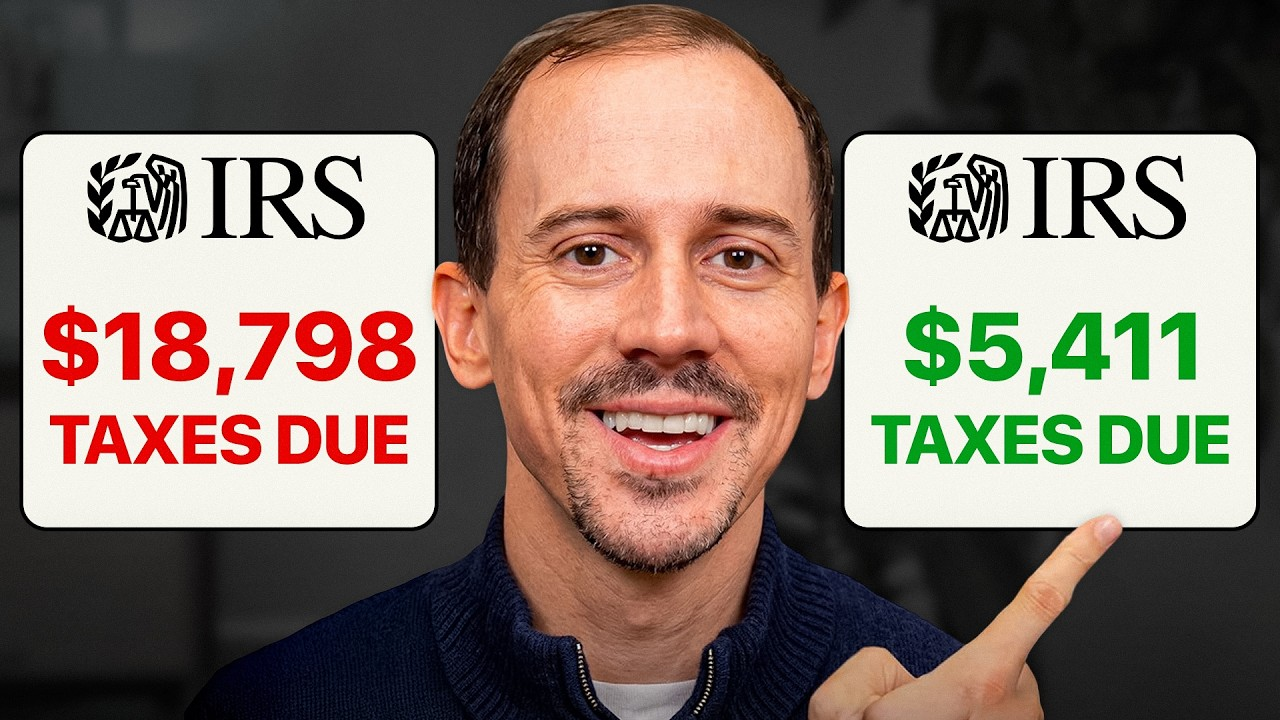
Asset location. Rather than spreading investments evenly across all account types, strategically place stocks first in the taxable brokerage account, then the Roth, with traditional IRA and 401k last. For Sarah, this alone saves over $10,000.
Spending order. Most people default to taxable accounts first, then IRA, then Roth last. Adjusting the sequence — taxable, then Roth, then IRA last — pushed Sarah's lifetime tax savings from $10,000 to $100,000.
Roth conversions. The years before Social Security and RMDs begin are naturally lower-income years. That's the window to convert IRA assets into a Roth at a lower locked-in rate rather than a higher rate later. Layering this in brought Sarah's total lifetime tax savings to $142,000.
Obstacle 5: No Built-In Caregiver or Default Estate Decision-Maker
For anyone who reaches 65, there's roughly a 70% chance of a long-term care event at some point. Married couples often have a built-in caregiver in each other. Single retirees don't. The same gap exists on the estate side — no default healthcare power of attorney, no financial power of attorney, no automatic decision-maker if incapacity occurs. Without naming someone, courts may end up deciding for you.
The fix — fund long-term care deliberately. Assisted living runs roughly $74,000 a year nationally; in-home care is similar. Long-term care insurance has become expensive enough that many people now look at hybrid health insurance policies or simple self-funding instead.
For Sarah, self-funding becomes possible specifically because of the equity freed up by downsizing. The $400,000 gap created by right-sizing her home is enough to fund a multi-year long-term care event — the most common solution I've seen work for single retirees.
There's one more layer worth knowing. If Sarah eventually sells her home outright when she moves into long-term care in her final years, it creates an unusual tax opportunity. Long-term care expenses above a certain threshold become deductible, opening a window for Roth conversions at low locked-in rates. Done in those final years, the benefit passes to her beneficiaries completely tax-free — pushing her total net worth improvement to roughly $1.4 million above her starting trajectory.
The fix — build your team. As a single retiree, you don't have a built-in co-pilot. Building one deliberately — a CPA, a financial advisor, an estate attorney — fills that gap. FreeWill.com (a public benefit corporation, no affiliation) offers free basics: a will, healthcare power of attorney, durable power of attorney, and in some states a living trust. For more complex situations, an estate attorney is worth the cost.
What It All Adds Up To
Layering these fixes together — Social Security deferral, tax restructuring, and home right-sizing — turns Sarah's plan from a retirement that runs out at 87 to one with a green light and room to spare. Her overall net worth ends up roughly $1 million higher than her original trajectory. And the real payoff isn't just a bigger number: with this much room built into the plan, Sarah can retire a year earlier than planned and increase her monthly spending from $8,000 to $8,200 — comfortably, without jeopardizing anything.
The retirement system wasn't designed for single retirees. But the tools exist to beat it — if you know where to look.