May 18, 2026 | Jonathan Bird
Retirement Isn't the Destination. It's the Beginning.
Retirement is not the point of your financial life. It is the beginning of it. Everything you saved, built, and invested — that wasn't the destination. That was the preparation. The destination is what you do with that freedom on the other side.
Most people never stop to think about what that actually looks like for them. This is for those who want to.
The Version of Retirement Most People Are Working Toward
Stop working. Travel. Spend time with family. Golf. Garden. Rest.
None of that is wrong. But here's an honest question worth sitting with: if you took your values seriously and opened yourself up to anything that's possible, is that version going to be the most fulfilling thing you can imagine? A lot of people don't actually believe it is — they default to it because no one ever asked them to think bigger.
Retirement is just another word for financial independence. And financial independence means the ability to choose anything. What you work on, why you work on it, what you build, what you contribute, and how you go about it. Retirement and financial independence are the same moment — the moment you finally get to choose.
Most people spend decades getting to the point where they can ask that question. Very few have spent any time answering it. That's the purpose side of retirement, and it's the part almost everyone skips before jumping straight to the math.
The Math Is Simpler Than Anyone Is Telling You
Here's the whole equation: your retirement spending gets addressed first by your income sources — Social Security, pension, rental income. Whatever's left over needs to come from your portfolio. There's a gap between what you want to spend and what's already covered, and that gap is what your portfolio has to fund over your specific retirement horizon.
That's it. That's the whole thing.
It's not simple to execute, but it is simple to understand. Once you see it this way, the numbers stop feeling mysterious. What you get is a specific, knowable, finite target. The reason most people don't know their actual number isn't because it's incalculable — it's because they've never sat down and run through it with their real income and their real spending.
Standard vs. Spectacular: A Choice Most People Don't Realize They're Making
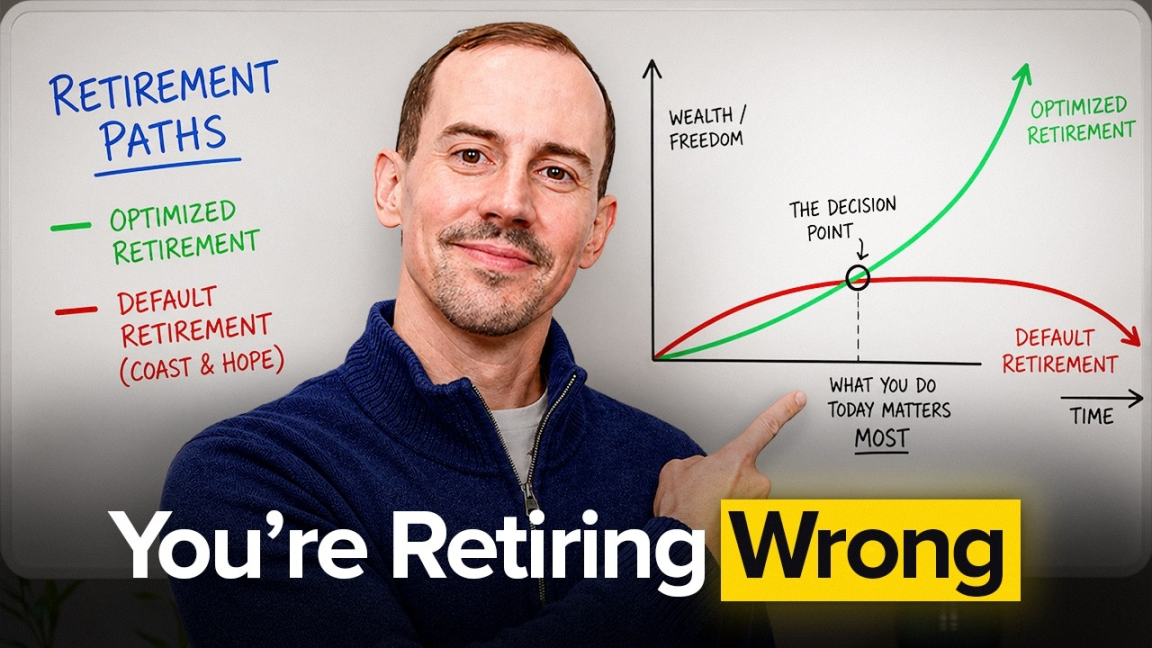
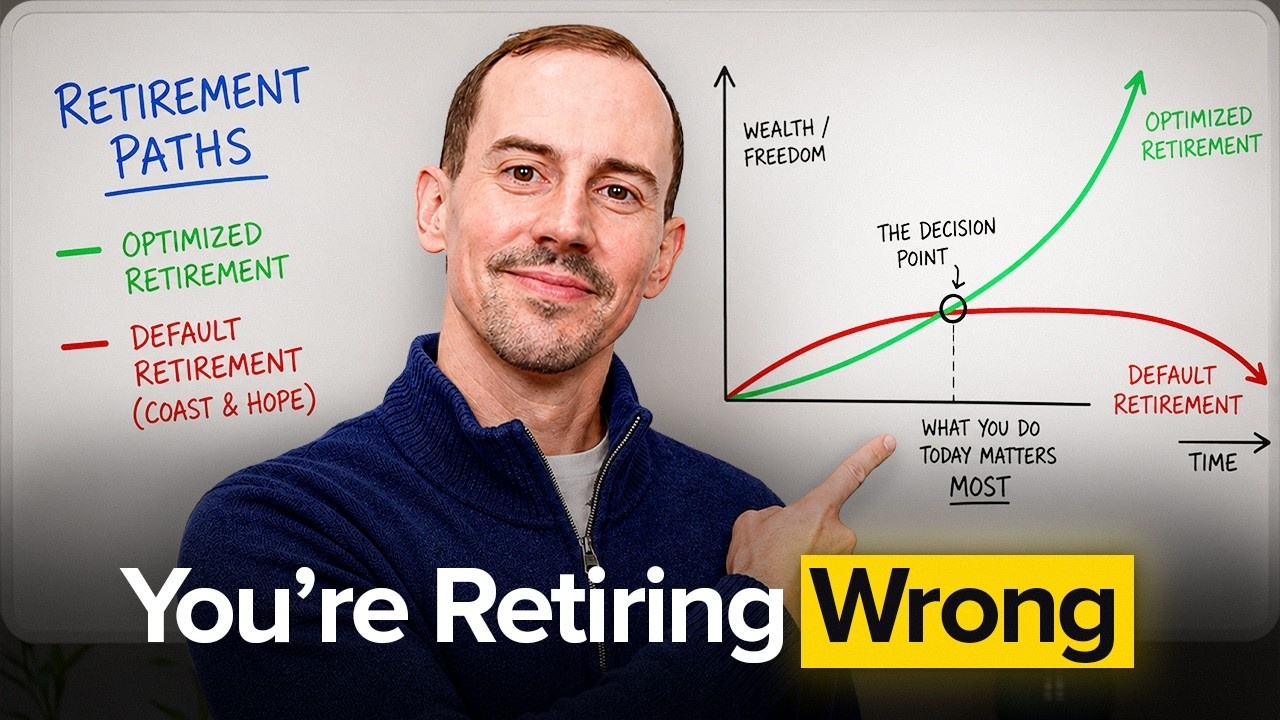
Once you know what you need, the question becomes how you're going to get there. And there are two very different answers — one produces a standard retirement, the other produces a spectacular one.
Getting by looks like this: you default to whatever your 401k suggested when you first enrolled, follow some investment recommendations, and stay on autopilot through retirement. You ignore the opportunities to lower your lifetime tax bill — no Roth conversions, no spending order strategy, no attention to Social Security timing. And here's the honest truth: a lot of people could still make it through retirement doing exactly that. They'd cover their expenses, maintain their lifestyle, and potentially leave something to their heirs.
But that world is very different from the alternative.
Optimizing starts with having a genuine vision for what you want your future to look like — and then building your portfolio, your tax strategy, and your income plan around achieving it. Because when you have a real purpose for what you want your money to fund, you have a reason to pursue every dollar of efficiency available to you.
Asset location. Spending order. The 0% long-term capital gains bracket. Roth conversions in low-income years. These strategies can move the needle by tens or hundreds of thousands of dollars over a retirement. Not just to leave to beneficiaries — but to fund the outcomes that actually matter to you before you leave this earth.
The difference between getting by and optimizing over 30 or 40 years in retirement is the difference between coasting through and covering expenses — versus a retirement where your grandchildren's education is funded, your home is paid off, and you were able to start the nonprofit that creates the change you actually want to see in the world.
The Real Question
Do you want to coast through retirement? Or do you want to see the lighthouse in the distance, turn the engine on, and make a break for it?
That's not a rhetorical question. It's worth asking yourself now — because the answer actually determines which world you end up in.
The clients who get this right aren't the ones with the biggest portfolios. They're the ones who showed up with a real answer to the purpose question, ran the math, and made a deliberate decision to optimize rather than coast. Their retirements don't look like what most people picture when they hear the word retirement. They're not on permanent vacation. They're doing things that actually matter to them — creating, building, spending their time in a way they actively chose rather than defaulted into.
The financial plan is the infrastructure that makes all of that possible. It's not about the 4% rule or some benchmark or a number someone mentioned at a party. It's about understanding what retirement really is — and then building a plan that's worthy of it.
Retirement is a design problem. And like any design problem, it gets solved when you create a clear vision and build a plan around it.