June 20, 2026 | Jonathan Bird
The Roth Conversion Window Most Retirees Miss — And What It Costs to Miss It
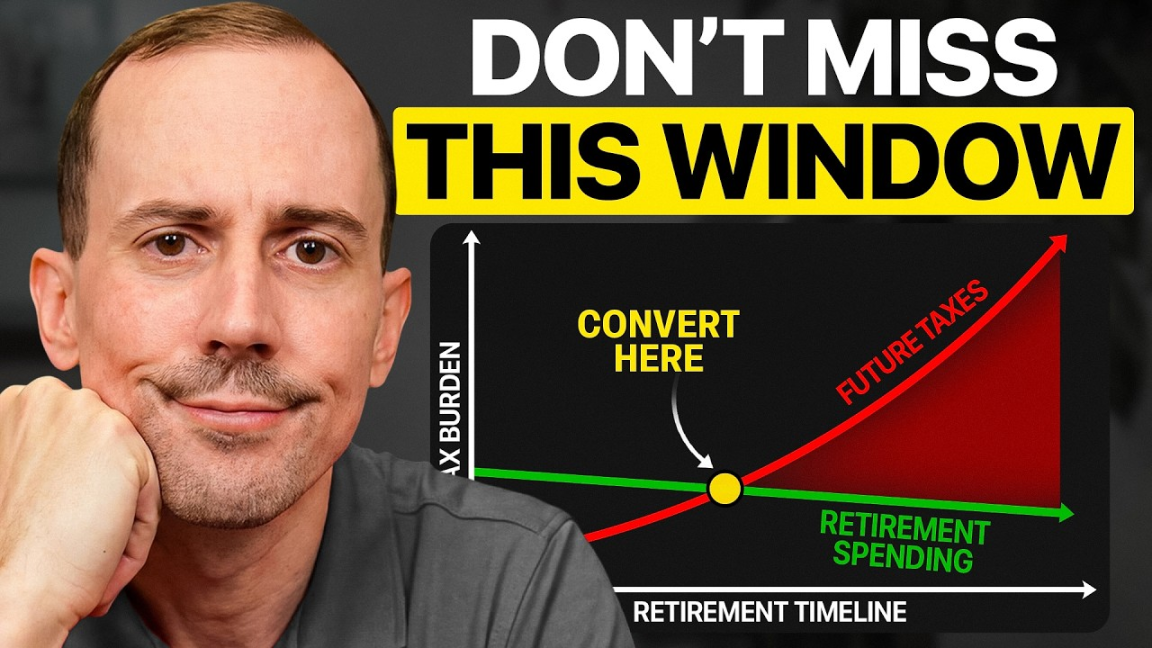
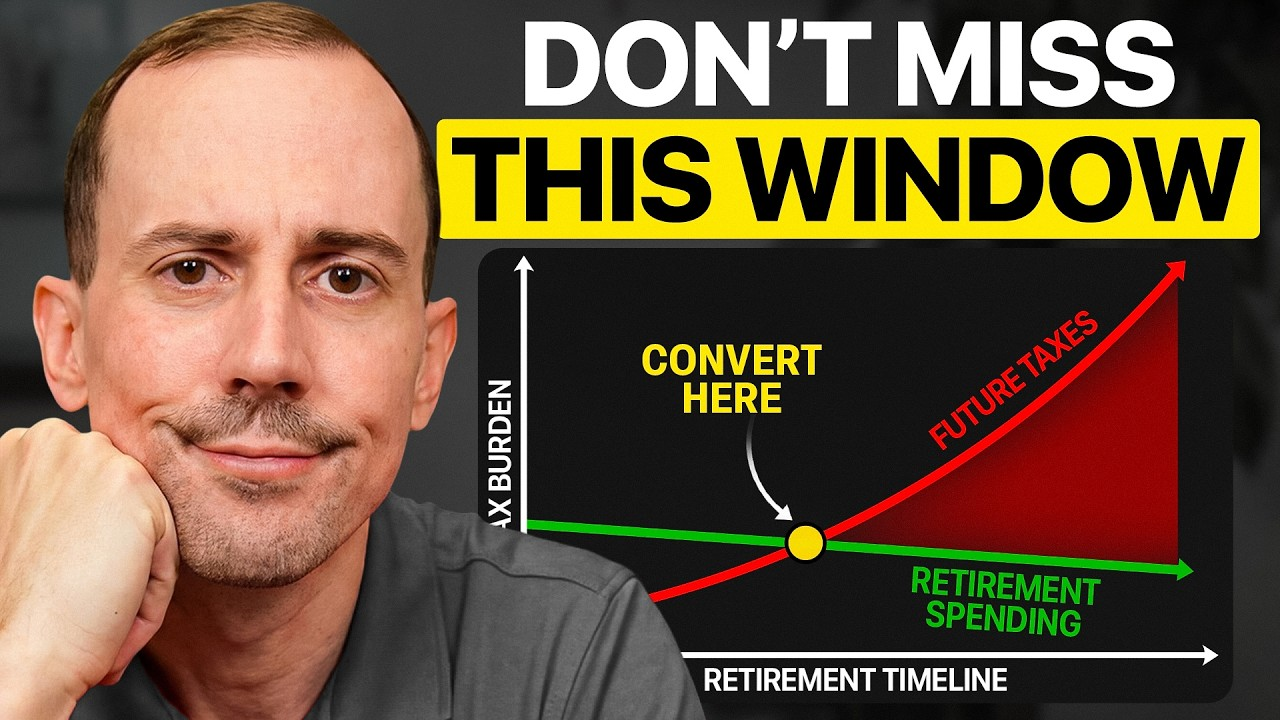
There's a window in most retirees' lives — roughly 5 to 12 years — where moving money from pre-tax retirement accounts into a Roth IRA can save hundreds of thousands of dollars in lifetime taxes. Most people miss it entirely. Not because they're careless, but because nobody told them it existed until it was too late.
Here's how to think about it: doing Roth conversions in the 10–12% bracket may be a slam dunk. At 22–24%, may be a mid-range jumper — still worth taking in the right situation. At 32%, it’s like shooting a three-pointer. And at 37%, you're heaving a half-court shot. It can theoretically go in, but it's very hard to justify.
The goal is to find the window where you're taking slam dunks — and do as many as possible before it closes.
The Couple Who Got It Right
A couple came to us at 65 with about $3 million between their traditional 401k and IRA. Their question was simple: how do we fund our lifestyle while minimizing our lifetime tax bill?
The answer was the Roth conversion window.
When they stopped working, their income dropped to the lowest level it had been in over 30 years. Social Security hadn't started. Required minimum distributions — the government's forced withdrawals from IRA accounts that begin at 73 — hadn't begun either. That combination created an unusually low-income period where they could move money from the IRA into a Roth at the 10 and 12% brackets.
So for five consecutive years, that's exactly what we did. By the time RMDs finally kicked in at 73, the IRA balance had been drawn down enough that the mandatory distributions aligned almost perfectly with what they actually wanted to spend. No painful tax spike. No forced income they didn't need. Just a clean setup — with a growing Roth IRA behind it that will compound tax-free for the rest of their lives and pass to their heirs tax-free as well.
One note on the inheritance side: under the SECURE Act, beneficiaries who inherit a traditional IRA must withdraw the full balance within 10 years — and pay ordinary income taxes on every distribution. Inheriting a Roth IRA carries the same 10-year rule, but every dollar comes out tax-free. That difference can be worth hundreds of thousands of dollars to the next generation.
To fund their lifestyle during the conversion years without touching the growth portfolio, we used the castle and moat strategy — keeping stocks and real estate as the engine, with a buffer of cash and bonds to cover spending and protect against market downturns while the conversions happened.
Three Pitfalls That Can Wreck the Strategy
The five-year rule. Every Roth conversion starts its own five-year clock. If you withdraw the earnings from a conversion before five years have passed, you'll owe a penalty. The IRS also has a specific withdrawal ordering rule: contributions come out first, then conversions in chronological order, then earnings. If you're doing multiple conversions over several years and plan to access the money early, the timing of each matters.
IRMAA surcharges. The higher your income, the more Medicare charges you. Premiums range from $23 per month per person at the low end to $690 per month at the high end — a difference of over $11,000 per year for a couple. Doing large Roth conversions without accounting for IRMAA thresholds can trigger premium surcharges that erode much of the tax savings you were targeting. The goal isn't to convert everything — it's to convert the right amount in each year to stay below the next cliff.
Worth knowing: there's a form called SSA-44 that almost nobody has heard of. If your income has dropped due to retirement, disability, or a death in the family, you can file it to request lower Medicare premiums based on your current situation rather than the two-year-lagged income the government would otherwise use. We've saved clients thousands of dollars with this form.
Net investment income tax. Roth conversions aren't directly subject to the 3.8% net investment income tax — but they can indirectly trigger it. If the additional income from a conversion pushes your dividends and interest from your taxable brokerage account past the NIIT threshold, you've effectively added a hidden cost to the conversion. Sizing conversions carefully to stay below both the IRMAA cliffs and the NIIT threshold is part of doing this well.
The Couple Who Waited Too Long
A second couple came to us at 72 with a similar portfolio — about $2.7 million. They were already receiving Social Security. RMDs were one year away.
When we modeled the IRA balance, their projected RMDs came in near $120,000 per year. Stacked on top of their Social Security income, that pushed them into the 32% bracket — and there was essentially no path out. We did conversions in that final year before RMDs began, which helped modestly. But they've been locked into high mandatory income and high taxes ever since.
These were intelligent, financially disciplined people. They simply never had the conversation about Roth conversions while the window was open — and by the time they arrived, most of the opportunity was gone.
The Roth conversion window is one of the highest-leverage moves available to a retiree. But it's also one of the easiest to get wrong — by converting too aggressively in the wrong year, ignoring IRMAA, or simply waiting too long for the window to matter.
If you're in the gap years — retired or nearly retired, not yet taking Social Security, no RMDs yet — this is your window. The slam dunks may be available right now. The question is whether you'll take them before they disappear.