May 30, 2026 | Jonathan Bird
15 Activities That Make Retirement Worth Working For
Do you know what you're going to do in retirement? For most people, that's an afterthought. You have some vague sense of your interests and quietly settle on figuring it out as you go.
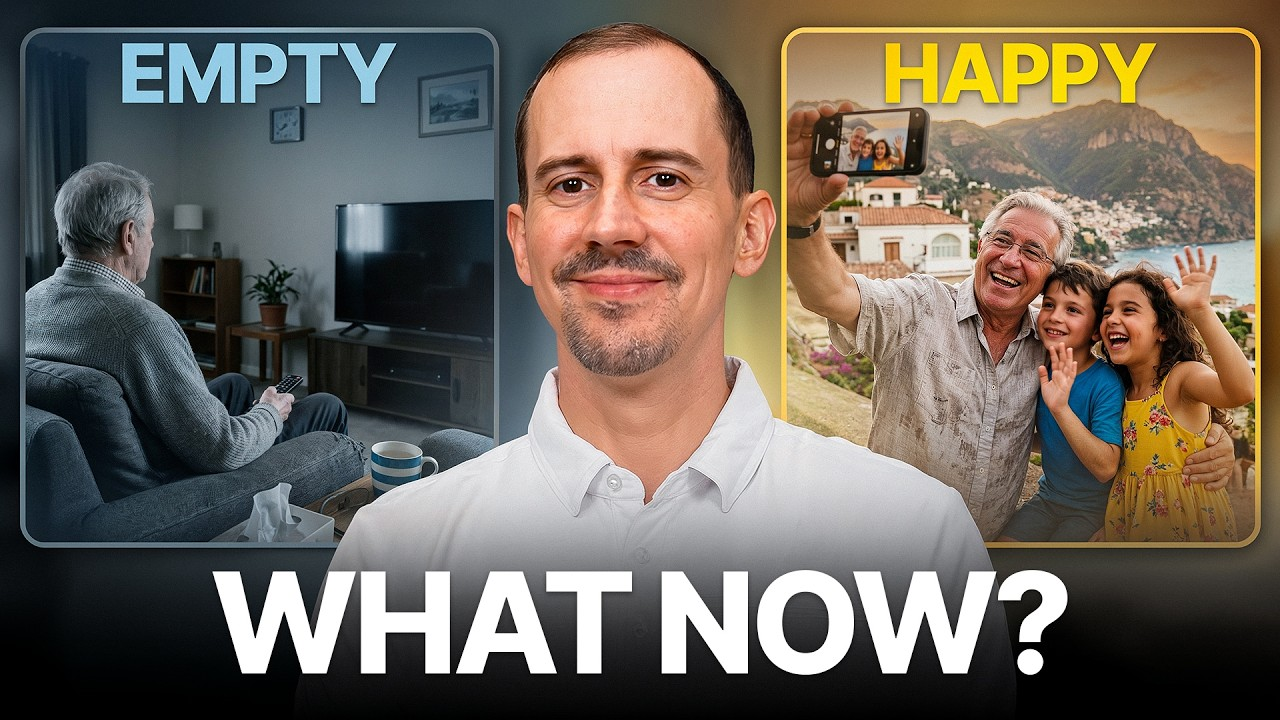
After 12 years working with retirees, I've found one primary difference between those who are happily retired and those who are quietly miserable — and it has nothing to do with money. It's whether their days are filled with things that are genuinely fun and fulfilling. The happiest retirees I know light up talking about their hobbies. They wouldn't trade a second of it to go back to work.
Here are 15 activities that make retirement worth building toward. Don't try to do all of them — pick one or two that make you curious, block off time to explore them, and see where it goes.
1. Start a Standing Tradition
This is the one thing I've never seen a retiree regret. A standing Sunday dinner. A weekly walk with friends. A monthly gathering that shows up on the calendar without anyone having to organize it each time.
I have a close friend named Harry whose parents, when he graduated from college, simply said: "Let's have Sunday dinner together every week at our house." Nothing fancy — the meal isn't the point. What's special is that every Sunday since then, the whole family gets together without discussion. My family friend Kirsty has a group of women who walk around a lake every Sunday and call themselves the Ladies of the Lake. No admission price. Just a walk, some jokes, and a standing commitment to show up.
Retirement removes a lot of the social structure that work used to provide. Standing traditions can help replace it.
2. Catalog Your Family Tree — Then Go Meet Them
There's something remarkable about what technology now makes possible here. Services like 23andMe or Ancestry can trace lineage back generations and connect you with living relatives you didn't know existed. A family friend submitted her DNA, consented to sharing it, and discovered relatives in Ireland. She booked a trip, walked into the small family business in a tiny town, and said, "I think we might be related." She now has a friend in Ireland who visits her and vice versa.
It's 23andMe, but face to face. It puts names and adventures behind what would otherwise just be a visualization on a screen.
3. Pick Up Birding
I'll be upfront: as a 38-year-old, this sounds boring to me. But I have a close family friend — shout out to Mel — who was a doctor for decades and stumbled across birding after retirement. He watched the movie The Big Year and was inspired to try it. Now he shows up at parks, meets new people constantly, and has organized trips to Africa, South America, and the Galapagos.
All from looking for birds. There's more adventure sitting in that hobby than most people would ever guess, and almost all of it is free.
4. Golf or Pickleball — With a Goal Attached
Golf is practically synonymous with retirement. The problem is that retirees who don't attach any additional meaning to it find it gets boring fast. There are only so many times you can show up to the local course, get paired with strangers, and enjoy the round before it starts feeling monotonous.
What works: find one person you genuinely like playing with, and pick a goal — a handicap target, a personal best round, a specific course you want to play. Suddenly the game creates adventures. You're traveling for it, improving at it, competing in a healthy way. And the person next to you makes all the difference.
5. Book the Bucket List Trip — Actually Book It
Everyone has the trip they've always wanted to take. Retirement is the time to stop talking about it and put it on the calendar. Japan. Italy. The national parks. The seven wonders. Whatever it is — figure out who you want to bring, and book it.
The real opportunity isn't just the destination. It's being thoughtful about who comes with you. Bringing your kids or grandkids turns a trip into a memory that lasts generations.
6. Relocate or Renovate
There's a quote I keep coming back to: "We shape our houses and our houses shape us." The environment you live in influences your daily habits more than most people realize — and so does the neighborhood and the city around it.
My wife and I made this decision ourselves, moving from Phoenix to Flagstaff for the cool weather, quiet, and access to nature. Every time I show up at a trailhead, I'm surrounded by people who love being where they are. If there's an environment that genuinely energizes you — the mountains, the coast, a walkable city — relocating to it, or renovating your current home to better reflect who you are now, can reshape your entire daily experience.
7. Record Your Stories and Share Them
Of everything on this list, this one would be in my top three. My own grandmother would tell me stories when I visited her, but by the time I was genuinely interested in hearing them, she'd forgotten most of them. She was already in her late 80s.
The opportunity is this: while you're still healthy and vibrant, capture the stories that shaped you. What are your values and where do they come from? What were the most formative experiences of your life? Who were the characters? What were the highs and the lows?
You don't need to be a writer. Just sit in front of your phone and talk. Video captures not just the words but your expressions, your voice, your energy — things that text on a page never can. And here's the part that elevates it: don't just record it to be discovered after you're gone. Gather the family, play it for them in the room, and watch their faces. You'll get to answer their questions. You'll get to hear what they want to understand better. Everyone wins in a way that a recorded message left in a drawer never could.
8. Train for the Body You Want at 80
Lifespan is how long you live. Healthspan is how long you can actually do the things you love. Most retirees, when I ask them, want to extend their healthspan as long as physically possible.
Longevity specialist Peter Attia has a useful framework for this: the longevity decathlon. Pick the 10 activities you most want to be able to do deep into old age — biking, hiking, holding a grandchild, swimming, whatever they are — and then literally train for them. Build the muscle capacity and flexibility those activities require, proactively, now.
One metric worth knowing: VO2 max has the highest correlation with longevity and all-cause mortality of any measurable metric that exists. The higher your VO2 max, the longer you can expect to live and the lower your risk across almost every category. The good news is that no matter where you are today, you can improve it — at any age.
9. Build, Restore, or Write Something That Outlasts You
Maybe it's restoring a classic car from the 1950s. Maybe it's building a piece of furniture your grandchildren will still use 50 years from now. Maybe it's writing a short story that reflects your family's history, values, or the lessons you most want to pass forward.
These are artifacts. They stay with families across generations, and the act of making them is itself the gift — separate from whatever ends up in someone's hands later.
10. Learn a New Language Inside the Country That Speaks It
Most people want to learn a new language. What almost nobody does is simply go there and start figuring it out — ordering food in Italian, listening to locals on the street, letting the people around you become your teachers. The connections you make with people who want to help you learn make it more memorable than any app or classroom ever could.
11. Go Deeper Into Your Faith
No matter where your tradition comes from, there is a physical place on earth where it originated. Retirement creates the opportunity to actually go there — to hear from people close to it, to experience the sights and sounds and context that no book fully conveys.
I've had clients who found profound meaning visiting Israel, Bethlehem, and Mecca. For others, the journey inward is just as powerful: scripture study, community involvement, connecting with others who share the same values. For the right person, this dimension of retirement may be among the most meaningful of all.
12. Tutor or Coach the Next Generation
My dad started tutoring at his local school after retiring from medicine. He got matched with a gifted second grader who was already reading eighth and ninth grade vocabulary. It pushed my dad to keep finding ways to challenge the kid — physics concepts, emotional intelligence, critical thinking. The student has learned a lot. My dad keeps showing up every year because he genuinely enjoys it.
Several clients have coached their grandchildren's sports teams and found the same thing: what seemed overwhelming at first — all that energy, all that chaos — actually gives them energy. The secret, they discovered, wasn't any expertise they brought. It was simply showing up for kids who needed someone to show up.
13. Volunteer With Your Professional Skill Set
There's a difference between showing up to help and showing up with a specific skill set that an organization genuinely needs. Consider calling a school, charity, or nonprofit you care about and saying: "Here's what I spent my career getting good at. I want to make as big an impact as I can. What can we do together?"
Most people are shocked by the response. A career in operations, marketing, analytics, or sales — applied to an organization that's been running on goodwill and donated time — can double or triple their progress in areas they couldn't solve on their own. The conversation is worth having.
For those drawn to maximum impact per dollar, the charity evaluator GiveWell estimates that $1,600 given to their top-rated charities is statistically likely to save one life — through something as simple as malaria nets in sub-Saharan Africa.
14. Invest in Someone Young You Believe In
A client of mine was approached by friends decades ago who wanted to open a Taco Bell franchise. He gave them $10,000. Today, he receives over $400,000 per year as he exits that investment. The financial return has been remarkable — but what he talks about most is that he helped his friends build something, find their own success, and put themselves in a position to help others.
Financial independence in retirement creates an opportunity to set aside a small amount for exactly this — for the moment you meet someone with drive and a real idea and the ability to back them in a meaningful way.
15. Start the Business That Makes You Happy
Not for the money. Not to scale it. Just to do the thing you enjoy and align yourself with an outcome that matters to you.
A client named Joy started making chocolates as gifts for family. Her sister called her, said they were extraordinary, and insisted on paying. Word spread through the family. Then beyond it. Now Joy makes chocolate every week, has a steady side income from it, and describes it as one of the best parts of her life. The income is the last thing on her mind.
Whatever that looks like for you — helping people, working with animals, building something, teaching something — starting the business that makes you happy doesn't require a business plan or a growth strategy. It just requires beginning.
Pick one. Block it off on the calendar. Give it a real chance. In my experience, not a single client who has done that has ever regretted it.